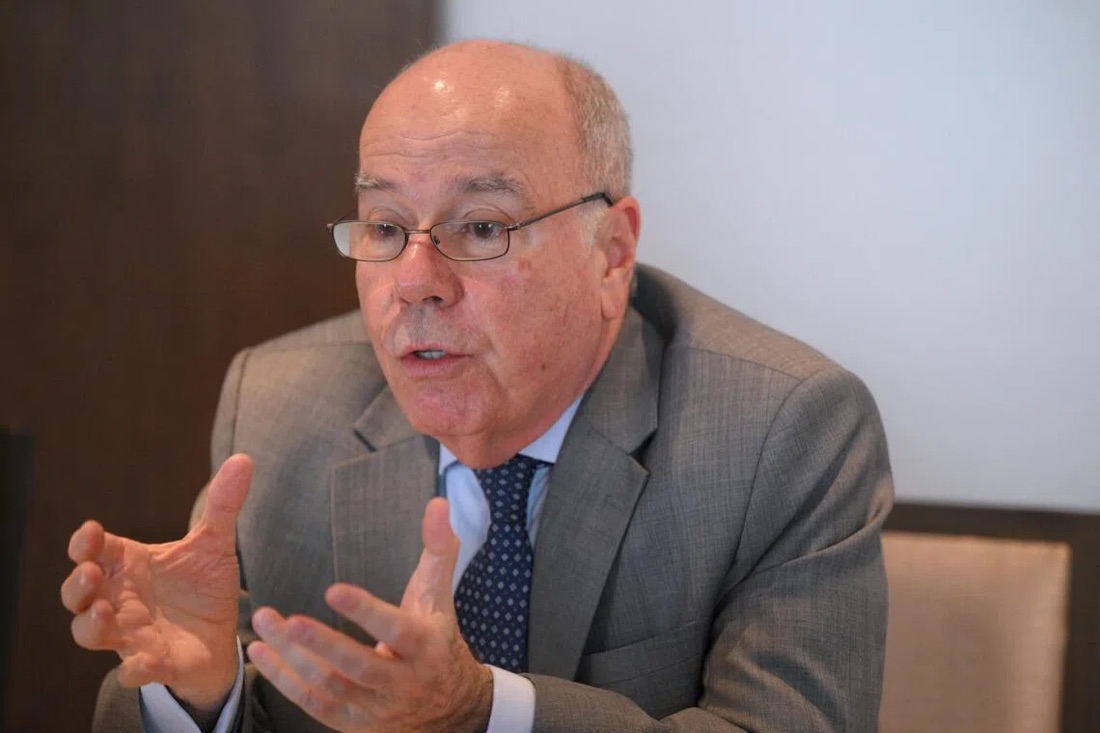
Readers of diplomatic history often conflate a country's foreign policy, the minister who conducts it and the commentary that interprets it. This archive keeps the three apart, and labels them throughout.
Brazilian foreign policyThe State's positions
Brazil's international relations are governed by the principles in Article 4 of the 1988 Constitution — among them national independence, non-intervention, self-determination, the peaceful settlement of disputes and the integration of Latin America. Positions are set by the President of the Republic and executed through Itamaraty.
Mauro Vieira's documented roleThe minister's office
As Minister of State for Foreign Affairs, Mauro Vieira directs the Foreign Ministry, advises the President and represents Brazil in negotiations and international forums. The site records what he did and said on the public record — chairing meetings, signing agreements, delivering statements.
Independent analysisInterpretation
Where this archive offers context or assessment — for example on the effect of shifting geopolitical conditions — it is marked as analysis and is not attributed to Mauro Vieira, the Government of Brazil or any official body.
South America
Mercosur, founded by the 1991 Treaty of Asunción, and relations with ten neighbouring states.
Latin America & Caribbean
CELAC, which Brazil rejoined in January 2023, and the constitutional goal of regional integration.
United States
The US recognised Brazil’s independence in 1824; Brazil's second-largest trading partner in 2024 and 2025.
Europe
A strategic partnership with the EU since 2007 and the EU–Mercosur agreement signed in January 2026.
China & Asia
China has been Brazil's largest trading partner since 2009; India a strategic partner since 2006.
Africa
Historic ties across the Atlantic, the CPLP, and South-South cooperation through the Brazilian Cooperation Agency.
Middle East
Support for a two-state solution and humanitarian access, set out at the UN and in regional visits.
Multilateral system
The UN, G20, BRICS and WTO — and Brazil's long-standing call to reform their governance.