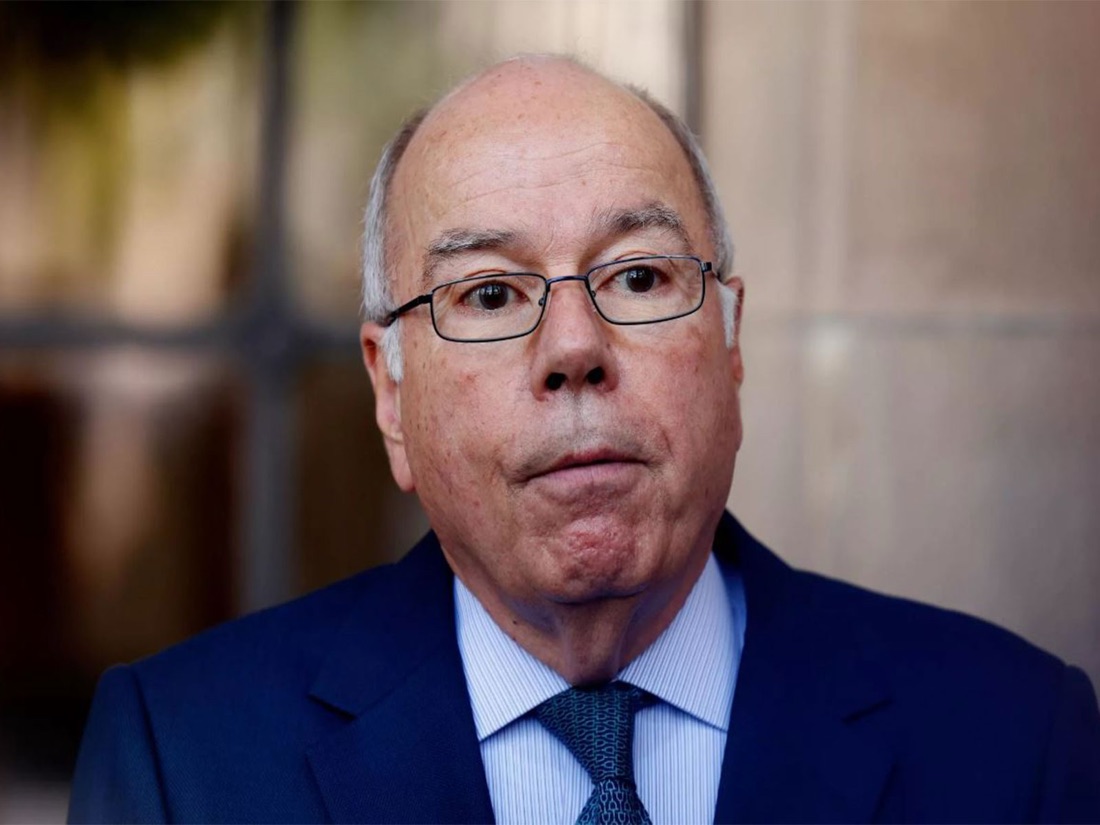
Assessing a serving foreign minister is an exercise in humility. The documentary record of his current term is incomplete; many of its consequences have not yet unfolded; and the outcomes of Brazilian diplomacy are, by constitutional design, the President’s policy before they are the minister’s. What follows therefore distinguishes firmly between the record — dated, sourced, verifiable — and interpretation, which is this archive’s own.
A career diplomat’s career
The most distinctive feature of Mauro Vieira’s profile is its ordinariness, in the best sense: he advanced through every rank of the Brazilian Foreign Service, from Third Secretary in 1974 to Minister First Class in 1999, alternating postings abroad with coordinating roles at headquarters. His early career was weighted towards economic and administrative work — the Economic Department, ALADI, secondments to the science and social-security ministries — and his mid-career towards the ministry’s central machinery, as chief of staff to the Secretariat-General and then to Minister Celso Amorim.
That trajectory matters for interpretation. It suggests an official whose authority rests on institutional knowledge rather than on a political base — a reading consistent with his appointment as minister by two presidents from the same political camp, a decade apart, each time directly from an ambassadorial post.
Ambassadorial experience
His four heads of mission — Buenos Aires, Washington, the United Nations and Zagreb — span Brazil’s most important neighbour, its most consequential Western partner, its principal multilateral stage and a smaller European capital. The public record of these postings is thin on individual initiatives, as is usual for ambassadors, whose work is largely confidential. The documented exception is multilateral: his chairmanship of the UN Peacebuilding Commission’s configuration on Guinea-Bissau.
Ministerial service
The second ministerial term has coincided with an exceptionally crowded agenda: a Security Council presidency in the first weeks of the Gaza war, the G20 presidency, the BRICS chairship, COP30, the conclusion and signature of the EU–Mercosur agreement, a tariff confrontation with the United States and a rupture in relations with Argentina’s government. The record shows the minister in the roles the office prescribes — chairing, negotiating, signing and speaking for Brazil.
The credibility of the current international governance system is under the rubble of Gaza
Source: Arab News
Two themes recur in his statements across both terms: the defence of multilateral institutions, and the call to reform them. At the G20 in Rio he recorded agreement that the UN, WTO, World Bank and IMF “need to be reformed”; at the BRICS ministerial in 2025 he described a multipolar world in which security should be “a right for all”. Whether these calls produce institutional change is a question for the longer term.
Brazilian foreign policy and multilateralism
Much of what is often attributed to an individual minister belongs, more accurately, to continuities of Brazilian foreign policy: the constitutional principles of non-intervention and peaceful settlement; the preference for UN-based solutions; the long campaign for Security Council reform; and the regional integration mandate. Vieira’s tenure illustrates those continuities more than it departs from them.
Global South and regional diplomacy
His second term has seen Brazil prioritise coalitions of emerging economies — notably BRICS, whose enlargement he publicly supported — alongside new agreements with Europe and Asia, from the EU–Mercosur agreement to the Mercosur–Singapore FTA and the UK strategic partnership. In the region, the record shows Brazil returning to CELAC and UNASUR, and navigating difficult files with Venezuela and, in 2026, Argentina. Observers differ on how successfully these different orientations have been balanced; this archive does not adjudicate that debate.
International representation and institutional significance
For Itamaraty as an institution, the appointment of a senior career diplomat to lead it — twice — is itself significant: it reinforces the professional character of the Foreign Service, which Brazilian and foreign observers often cite as a source of continuity in the country’s international conduct.